The United Nations Committee on the Rights of Persons with Disabilities hosted the Public Dialogue to review the European Union’s Implementation of the Convention on the Rights of Persons with Disabilities on 11 and 12 March. The European Union publicly explained how it’s advancing disability rights during this Dialogue.
You can read a complete summary by the United Nations. This article will bring you the 12 most memorable moments (according to us).
The questioning was led by the 3 experts who composed the Taskforce for the review of the European Union:
- Markus Schefer (the lead expert);
- Laverne Jacobs;
- Rosemary Kayess (who was not able to attend the dialogue).
That’s why you will notice that most of the memorable moments mention either Prof. Markus Schefer or Prof. Laverne Jacobs.

You can also watch the full recording for 11 March and the recording for 12 March.
1. When the Ombudsman asked the Commission to stop funding Institutions
The first memorable moment happened during the opening statement by the European Ombudsman. They warned the UN Committee experts about the lack of full compliance of the Commission when handing out EU funds. They especially mentioned that some EU funds to finance institutions where persons with disabilities live segregated and often deprived of liberty. The representative said, “Despite these Committees’ prior observation that the EU should strengthen its monitoring of EU Funds, so as to ensure they are not used to develop or expand institutions, concern still persists (…)” on the Funds still being used in this way.
Watch the Ombudsman comment on EU Funds (11 march at 21:08)
2. When an expert quizzed the Commission on how it applies the Convention
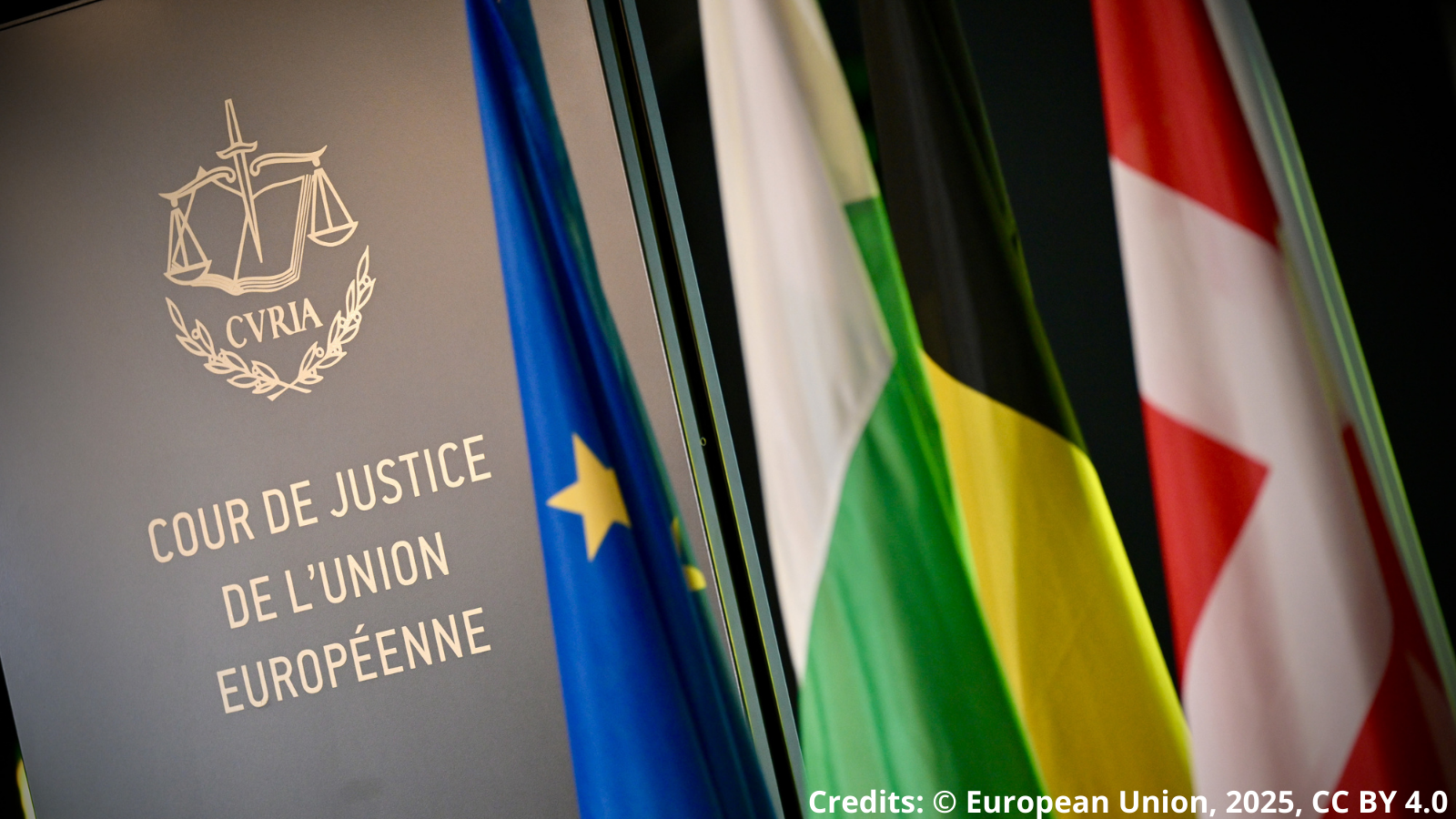
The first question from the Committee opened an important “Pandora’s box” of where the Convention sits in EU law. Taskforce leader Markus Schefer called the interpretation of the European Court of Justice “highly disappointing”. He added that the interpretations of UN Committee are sometimes not taken into account.
To its credit, the Commission reasserted the importance of the Convention. While “it has not a direct effect on primary EU law (treaties), it does have an effect on “secondary EU law” (Regulations, Directives, etc).
Watch the dialogue on EU law and the Convention (11 March at 31:00)
3. When an expert was surprised that a “thorough review of EU law” was not done, despite being asked in 2015
The second question asked by Taskforce leader Markus Schefer focused on a recommendation from paragraph 9 of the Concluding Observations of 2015: to do a thorough review of EU law to ensure it complies with the Convention.
The Commission responded that the way it is being done is ‘progressive’ – the review is only done when the European Union decides the laws are to be revised. The Commission explained, with pride, that the number of laws that mention persons with disabilities had risen from less than 50 in 2011 (when the Convention entered into force in the EU) to over 140 in 2017.
The task force leader was not satisfied, answering that “conducting a thorough investigation into EU legislation over the years would have taken a plan (…), and I am not aware of the fact that there is a plan …” And adding, “I am apprehensive of this continuous review (without the plan)…”
Watch the exchange on review laws (11 March from 37:40).
4. When the Committee was baffled that the legislation on “protection of adults “came out so wrong”.
Our campaign against the proposed legislation on cross-border protection of adults, which UN experts had also criticised, was an important topic for Professor Schefer, who brought it up at least twice. He started by using this proposed regulation as an example of why he doubts that “processes are in place to ensure new legislation is in line with the Convention” (11 March at 44:03)
He went back to the topic – and the insufficient explanations of the European Union delegation – at the end of the dialogue, criticising the fact that the proposed legislation was built on the Hague Convention, “which is in contravention with our Convention (on the Rights of Persons with Disabilities). He clearly criticises it “It is not the approach that the EU should be taking.”
Watch the final exchange on the legislation on Cross-border protection of adults (12 March at 02:45:15)
5. When the Taskforce leader was “somewhat worried” about the fate of the Equality Treatment Directive

Taskforce leader Markus Schefer brought up our concerns about the intention to withdraw the proposed Equal Treatment Directive at the 1-hour mark of the first day: “I am somewhat worried about the fate of the Equal Treatment Directive”. He asked why the Commission set such a short deadline to withdraw it.
The European Union Delegation explained the Commission “announced the intention to withdraw” within 6 months and that the other EU Institutions can say if they are not favourable to this.
Watch the question on the Equal Treatment Directive (11 March at 59:00)
6. When the Committee asked to update the EU Disability Rights Strategy
Taskforce leader Markus Schefer did not mince his words about the Strategy (on the Rights of Persons with Disabilities) 2021-2030 when he noted that its concrete actions and activities have ended.” He signalled that the Commission needs to update it with new actions as “aspirations, however, do not transform themselves (in) to concrete actions”.
The Commission indicated that they are doing a progress report and “where it is necessary, (will) come with new actions”.
The European disability movement has (many) suggestions for new actions for the updated Strategy.
Watch the exchange on the Strategy (11 March at 01:04:42)
7. When the Commission promised that women with disabilities would be fully included in the gender equality strategy
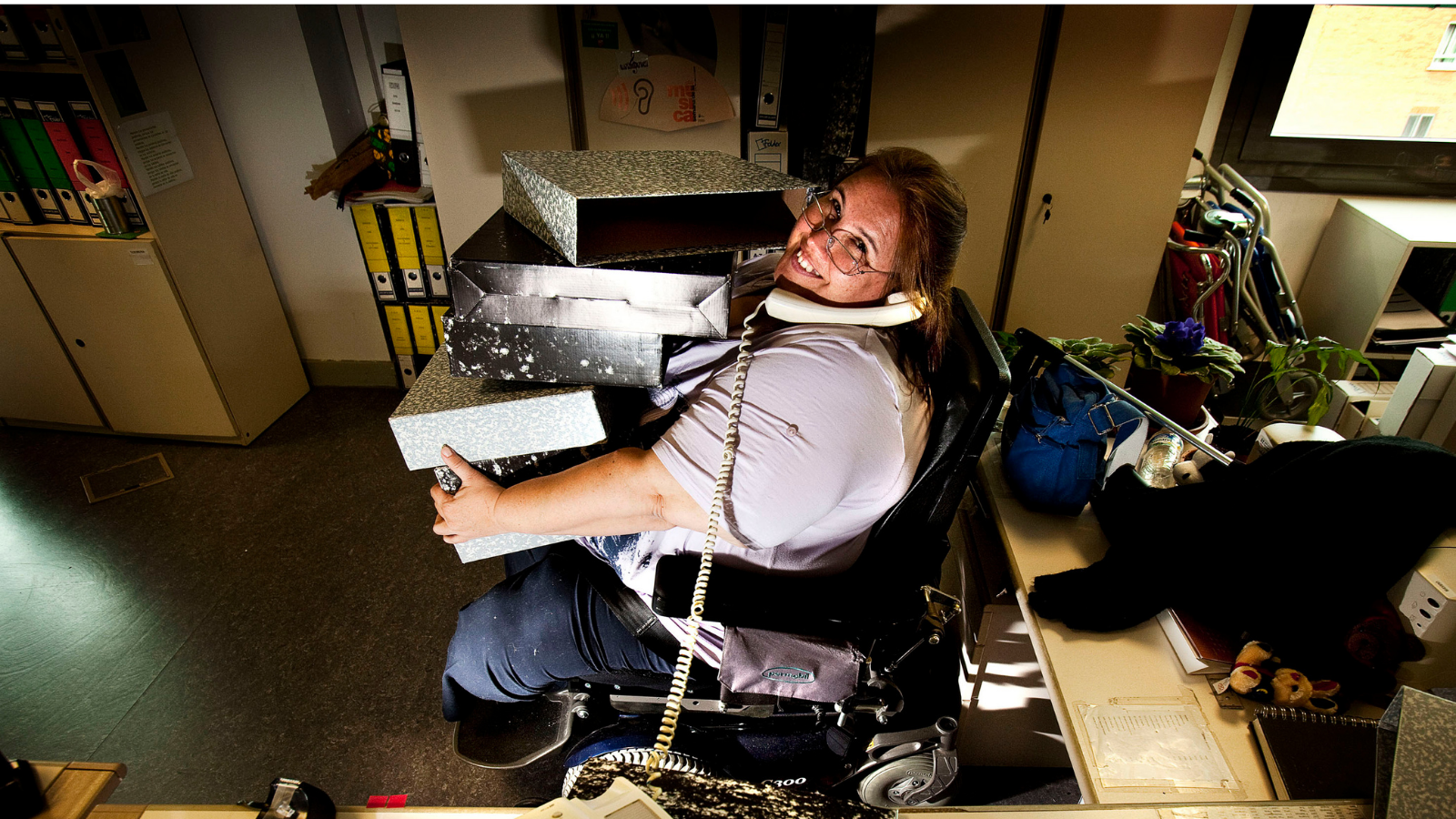
Taskforce member Prof. Laverne Jacobs was clear in pointing out the exclusion of women with disabilities in EU policies on Gender Equality. She focused on the Roadmap for Women’s Rights, a political declaration launched on 7 March 2025 that barely mentions disability. She stated that “despite the various practices (and) policies that you have identified, there does not seem to be any discussion in the Roadmap about women with disabilities (…)”
The European Union, in the person of the Director for the services on Equality, reaffirmed the commitment to women with disabilities, stating that “you can certainly have my personal commitment (…) to ensure intersectionality is very well reflected in all the different equality strategies …” including the upcoming Gender Equality Strategy;
Watch the discussion on the Roadmap (11 March at 01:16:00)
8. When the Committee and the EU Fundamental Rights Agency asked for a better monitoring mechanism
Committee experts and EU agencies alike were not happy with how the European Union monitors the implementation of the Convention – especially the dysfunction of the “monitoring framework” of the Convention (a body planned in the Convention to independently analyse how parties implement it).
The Taskforce leader, Markus Schefer, said outright that “it does not work well” and “none of the bodies involved has many positive things to say”. He added that the joint submission “is joint in name only”. (Watch 11 March 02:41:00)
In their closing, the Fundamental Rights essentially agreed with the Committee regarding the insufficiency of the monitoring mechanism. The represent said that the European Union must be “self-confident enough to establish a proper monitoring framework – financially, structurally and legally so equipped” that can independently monitor the Convention with a proper legal basis.
Watch the closing statement of the Fundamental Rights Agency (12 March at 02:50:39)
9. When the second day started with 3 questions on stopping EU funding to segregating institutions

The 12 March dialogue started strong with 3 questions on why the EU is still funding segregating institutions.
Prof Schefer reminded the delegation that the UN special rapporteur had criticised it during its visit to the European Union, and that the EU Agency Eurofound published a report showing that institutionalisation had increased in 13 EU countries in the last 10 years.
He quizzed the European Union on the application of their new Guidance on Independent Living and how they can apply and monitor Member States.
He “saved the best for last” by revealing that the Committee knows of a 2018 legal guidance from the EU legal services that “flatly contradicts the Committee’s own jurisprudence” and asking if the “EU is prepared to revoke and replace it with guidance in conformity” with the Convention.
The Commission replied that there are safeguards to support Independent Living (the “enabling” conditions that the Forum is advocating to keep), but that there is “shared management” of Cohesion Funds (which means EU countries also decide how to spend them).
The Commission declined to discuss in-depth the 2018 legal guidance but confirmed that the most recent document “reflects the views of the Commission”.
Watch the discussion on EU funds used to segregate persons with disabilities (12 March from 00:01:22)
10. When an expert condemned the failure to criminalise forced sterilisation
The discussion on article 17 – protecting the integrity of the person – focused on the barbaric practices of forced sterilisation, forced abortion and contraception. Markus Schefer denounced that “forced sterilisation, forced contraception, forced abortion, are still performed in EU countries, adding that “It’s hard to believe that barbarism of this magnitude is still being perpetrated in women and girls.”
He expressed his deep disappointment that the Directive to combat violence against women failed to criminalise forced sterilisation stating that it was “an unfortunate state of affairs”.
Watch the intervention on forced sterilisation (12 March at 41:43)
11. When the Committee quizzed in length the EU Institutions inclusion of staff with disabilities
Several experts quizzed the EU on how it treats staff with disabilities. Un Expert Gertrude Oforiwa Fefoame, for example, asked a general question about support and reasonable accommodation to staff with disabilities and to staff that act as carers of persons with disabilities.
The European Union provided a quite general answer, stating that there are “coordination and protocols” and that there is a centralised approach to financial support for staff with disabilities.
Taskforce member Laverne Jacobs then went back to the issue after the break, asking about “numerous reports of EU staff not receiving reasonable accommodation for tests” during recruitment processes and that there are difficulties for “personnel that requires assistive technologies.” She added a third question on “how the concept of disability is defined” in the process of getting health and staff insurance.
The European Union explained that the Personnel Office has added examples of reasonable accommodation to their website to guide candidates. They did recognise a failure in remote testing during the pandemic, and that the provider was changed because of it.
They moved on to the question on insurance mentioning that there is a “different team of doctors analysing different angles” to a more multidisciplinary approach. Prof Jacobs replied with the concern that “JSIS (insurance scheme) seems to deal quite a bit with doctors, with medical doctors, and I wonder to what extent the concept of barriers (for persons with disabilities) (…) is coming into play?”.
Watch the exchange on working for the EU (12 March at 01:11:28)
12. When the Committee asked for more EU funds for disability rights
Several experts brought the need for better funding of organisations of persons with disabilities, and better application of EU funds on international cooperation.
Other experts brought funding instruments like the Global Gateway, funds for development and humanitarian aid and, of course, EU funding that is still supporting institutions.
The Fundamental Rights Agency summarised well, stating that the European Union needs to “ensure all funding is in line not only with the letter but the spirit (of the Convention).”
What next?
The Committee will now prepare its Concluding Observations with recommendations for the European Union. It should be release in April.