The European Union and the European Disability Forum held a side event at the Conference of States Parties to the UN Convention on the Rights of Persons with Disabilities (UNCRPD) on 9 June, marking the Convention’s 20th anniversary.
The event discussed the essential role of Organisations of Persons with Disabilities and civil society in shaping disability-inclusive laws, policies and funding priorities.
The event explored both the progress made over the past two decades and the urgent need to protect civic space, strengthen participation and invest in long-term movement building.
Key messages from the discussion
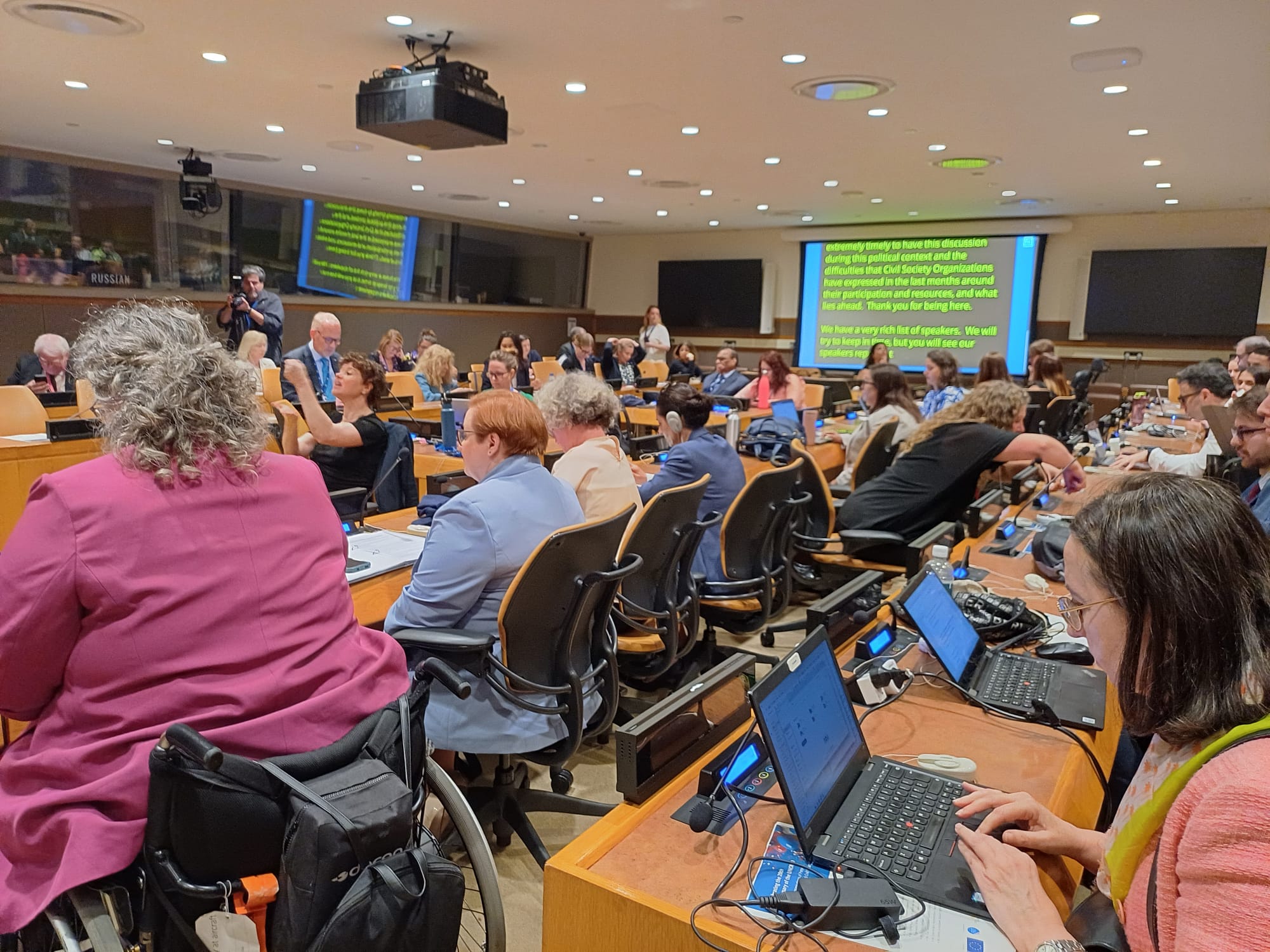
A strong theme throughout the event was that meaningful participation of persons with disabilities must be at the centre of decision-making.
Speakers stressed that Article 4.3 of the Convention on the Rights of Persons with Disabilities remains one of the Convention’s most transformative provisions, as it requires governments and institutions to closely consult and actively involve persons with disabilities through their representative organisations. This principle, often captured in the slogan “Nothing About Us Without Us”, was reflected in calls for structured, permanent and accessible consultation processes that concretely influence policy outcomes.
Several speakers highlighted the importance of funding models that recognise organisations of persons with disabilities as political actors, experts and co-creators of public policy.
Examples shared during the event showed positive developments:
- EU support through structural funding;
- Australian Support to systemic advocacy;
- the role of the Global Disability Fund in requiring direct funding to organisations of persons with disabilities;
- long-term grantmaking by the Disability Rights Fund to grassroots organisations.
Participants emphasised that core, flexible and long-term funding is essential to support advocacy, organisational development, and sustained engagement in law and policy reform. They highlighted that the project-based funding model practised by some authorities and donors is not sufficient to support representative organisations.
A difficult global context
The discussion also underlined that disability rights work is increasingly shaped by a difficult global context.
Speakers referred to shrinking civic space, reductions in funding, backlash against human rights, and the impact of overlapping crises such as conflict, climate change, economic hardship and digital transformation. Participants stressed that progress often takes time and requires patience, persistence and long-term alliances across movements, including women’s rights, climate justice and other social justice networks.
Youth leadership and intersectionality
Youth leadership and intersectionality were also central to the conversation.
Contributions from the International Disability Alliance highlighted the need to move beyond representation towards real influence, ensuring that youth with disabilities are engaged as partners and decision-makers. Speakers noted that disability rights advocacy must reflect the diversity of the disability community.
Examples of progress and continuing challenges
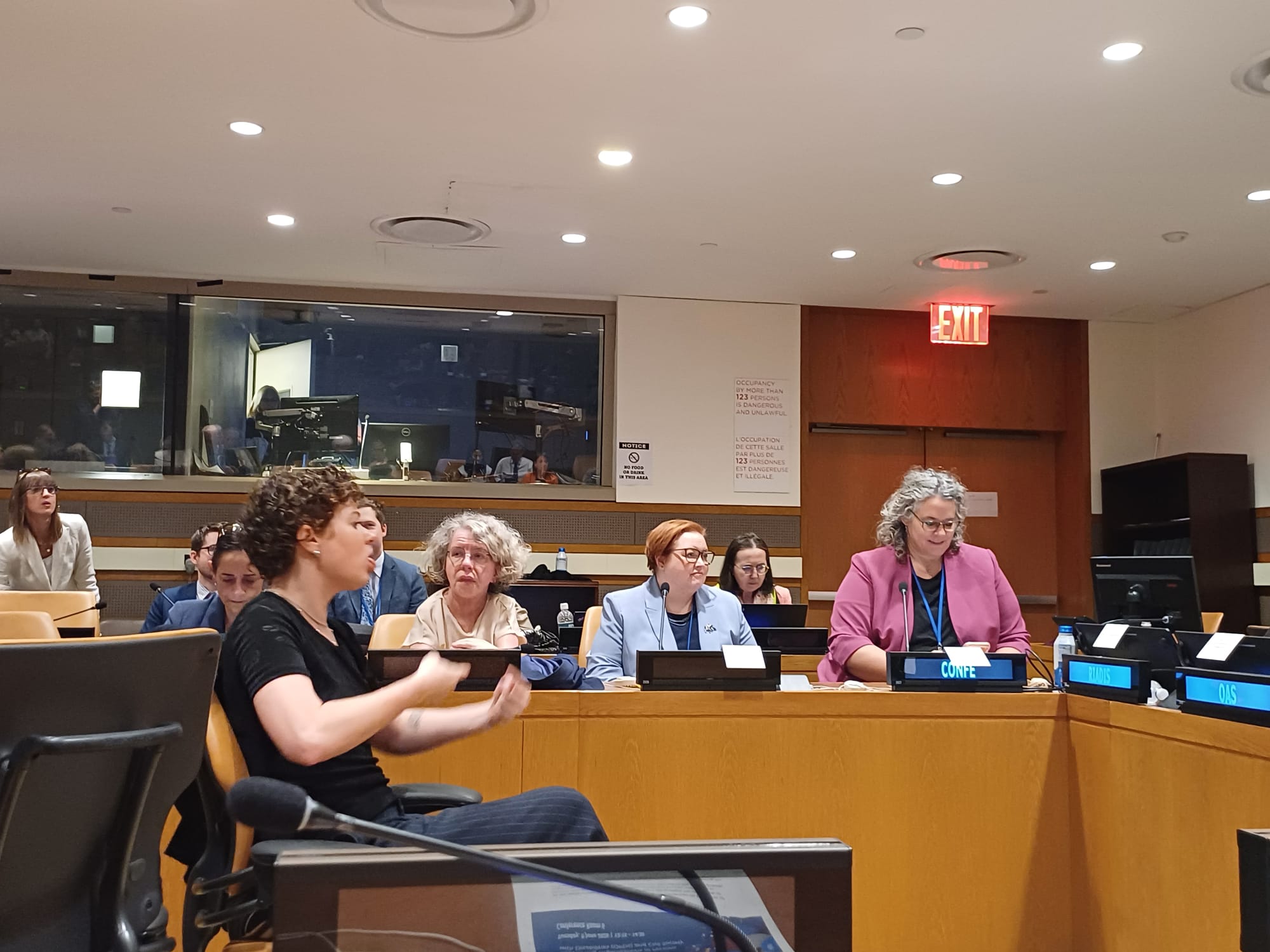
Speakers shared concrete examples of how consultation with organisations of persons with disabilities can improve public policy:
- Cypriot representatives described how structured and legally recognised consultation has contributed to reforms on independent living, community inclusion, supported decision-making and autism policy.
- Australian representatives outlined investment in systemic advocacy and representative organisations.
- Members of the European Parliament pointed to mechanisms such as the Disability Rights Week, the Disability Intergroup and the CRPD Network as spaces for mainstreaming disability rights across parliamentary work.
- Representatives of the European Economic and Social Committee stressed the need for solidarity across civil society at a time when organisations face growing pressure, uncertainty, and fear of expressing their views.
Audience interventions reinforced the urgency of fairer and more accessible funding systems.
Participants raised concerns about highly competitive calls, reserve lists, the difficulty smaller and more diverse organisations face in accessing grants, and the need to ensure disability is included in mainstream funding streams.
The discussion also touched on accessibility in political institutions, the difference between genuine and performative consultation, and the importance of creating new alliances and new spaces for activism.
A call for long-term commitment
The event made clear that twenty years after the adoption of the Convention on the Rights of Persons with Disabilities, the role of organisations of persons with disabilities and civil society remains fundamental to driving change
Governments, donors and institutions must ensure that persons with disabilities and their representative organisations have the space, resources and influence needed to participate fully.
It was both a moment to celebrate progress and a reminder that meaningful inclusion requires sustained political will, structural support and a long-term commitment to disability rights.