
Over 80 representatives of governments, disability advocates and experts gathered in Dublin, Ireland, to discuss how to ensure decent, affordable and accessible housing for persons with disabilities.
Setting the scene
Elaine Teague, Chief Executive Officer of the Disability Federation of Ireland, opened the conference by underlining how these discussions are essential to learn from each other, and ensure “people (are) living independently in the communities with dignity.”
She explained that there is a ‘storm brewing’ where people are being forced to decide “to heat or to eat”, and that the right to good housing is essential. Not only affording rent but having the house that is right for the person, with choice, control and dignity.
She added:
A home is a base. (…) Without the right home, the right place, with the right support, all other rights become more difficult to exercise.
James Browne, the Irish Minister for Housing, outlined the main advances by the Irish Government, including the National Housing Strategy for persons with disabilities, which coordinates the work of different state agencies and government departments. Ireland is 1 of 2 countries in the EU with such a strategy, and it is part of the broader framework of the general housing strategy.
Emer Higgins, Irish Minister of State with the Department of Children, Disability and Equality with special responsibility for Disability, added:
Having a home of your own, in a community of your choosing is something that matters to every single one of us.” She added “But housing is only one part of the picture; it’s also about having the right support in place in terms of independent living.
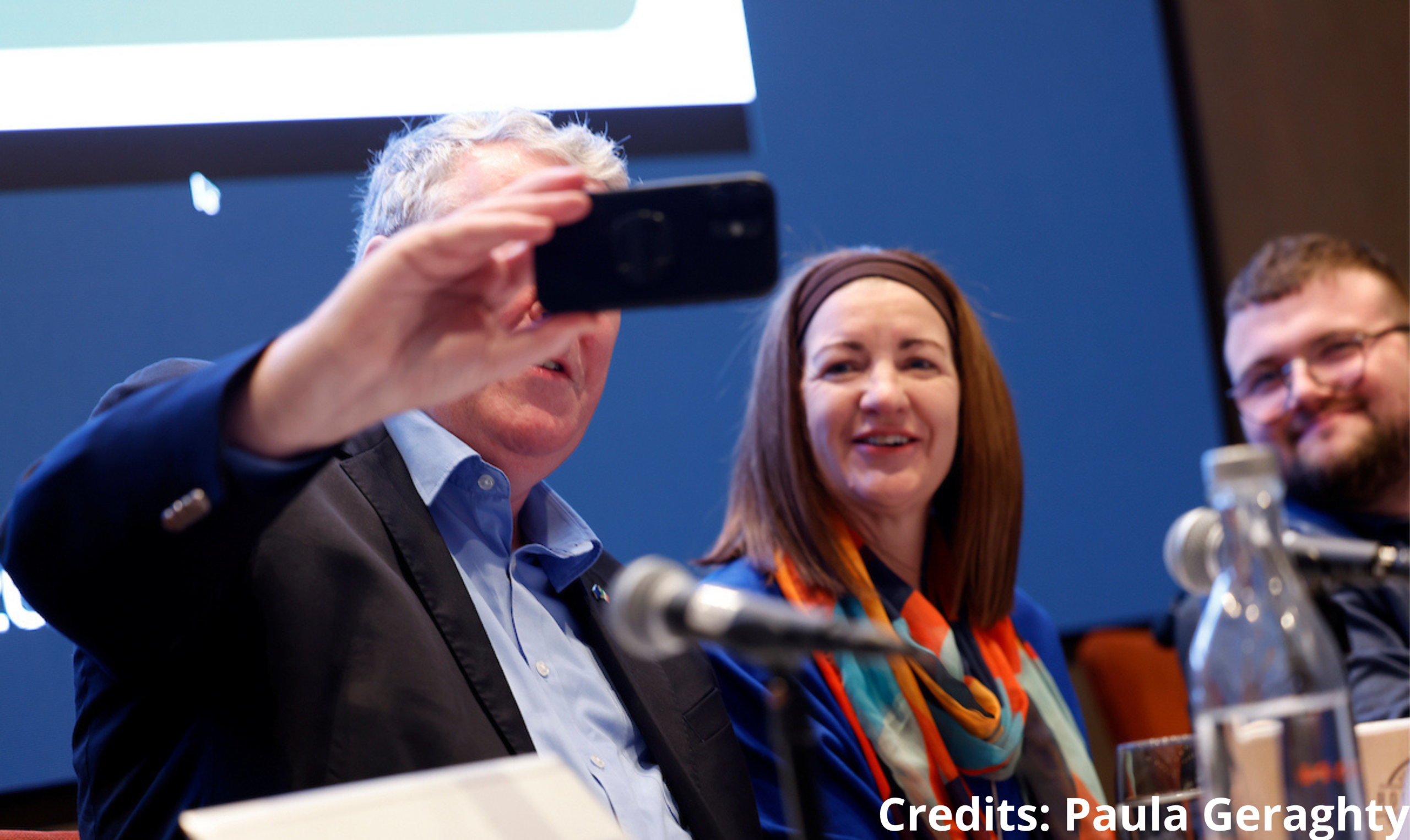
Ciaran Mullooly, Member of the European Parliament, explained that the European Parliament will establish a permanent Committee on Housing and he “will be the first one, in the front row, proposing legislation on housing and independent living.”
Gunta Anca, President of the European Disability Forum, highlighted that while the European Commission has made housing a priority,
there is nothing said about accessibility, nothing said about persons with disabilities.
She asked delegates to push their countries, and to share their experiences and opinions during the conference.
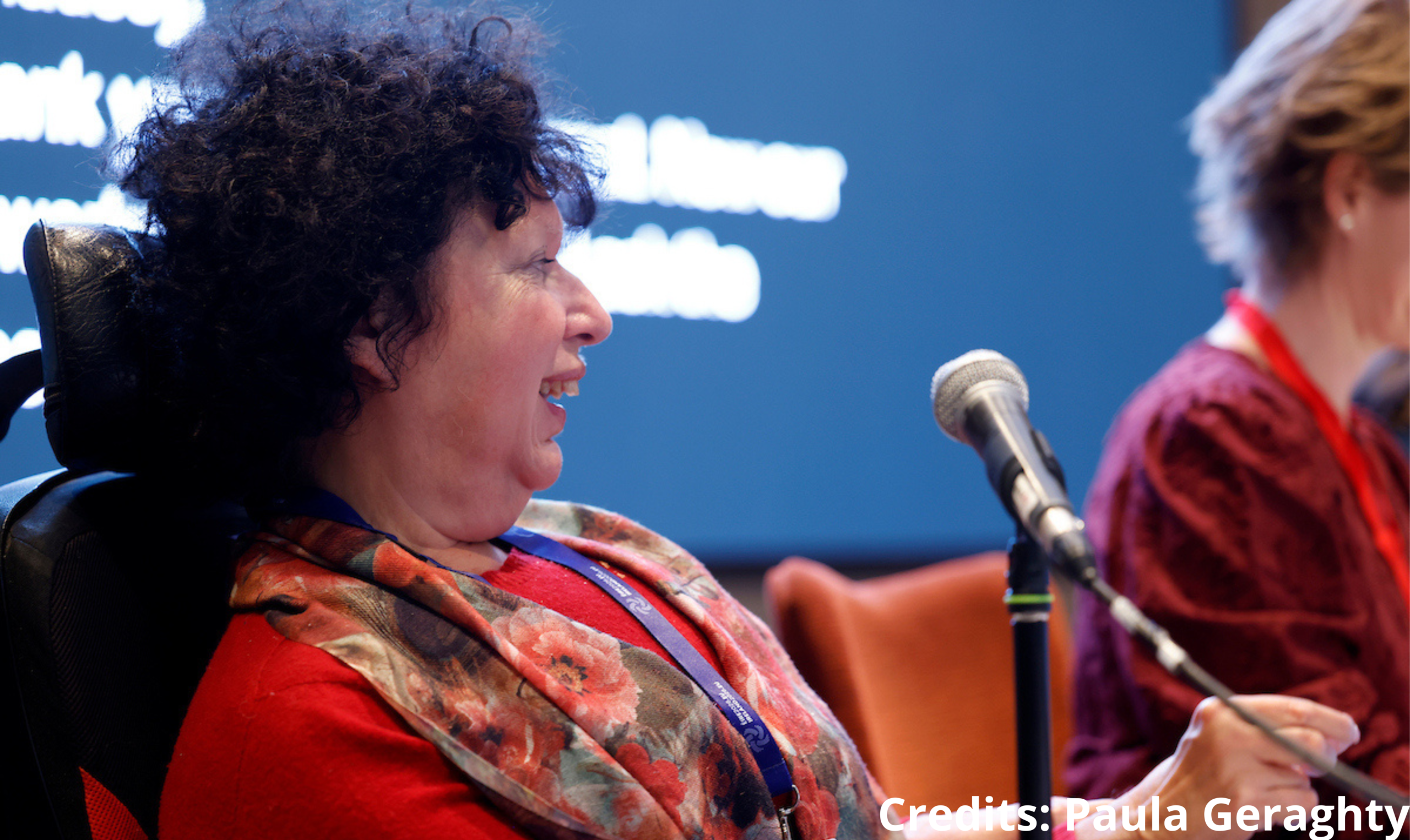
Irish disability rights advocate Conor Lynnot gave a stark reminder from his own experience. He shared how he completed a master’s programme with difficulty, not because of academics but because getting personal support and assistance was challenging:
To the housing authorities, urban planners and local authorities, let me tell you how much I am grateful for my house.
He added:
The measures are not measured in footage; they are measured in agency. Having that front door (..) is the reason I can live an ordinary life, without having my life mediated by a care manager and manage my relationship with my family (…) as a grown man
The pillars of housing: Affordability, Independent Living and accessibility standards
Participants then joined 3 working groups focused on affordability, independent living in the community, and rules for accessible buildings.
Affordability
The working group on affordability was moderated by Emer Begley, Director of Advocacy and Inclusion at Disability Federation Ireland. Catherine McGillycuddy, Development Specialist at the Irish Council for Social Housing, reported the main obstacles:
- Problems of trust: persons with disabilities are considered an inherent ‘risk’ for housing providers. Women with disabilities and persons with disabilities who are also part of other marginalised communities face extra challenges.
- Obstacles to guarantee affordable and accessible housing increase when searching for rentals, student housing, in places with older houses and when living outside cities.
- Legal capacity, lack of personal assistance, heavy bureaucracy, and language barriers are also significant barriers.
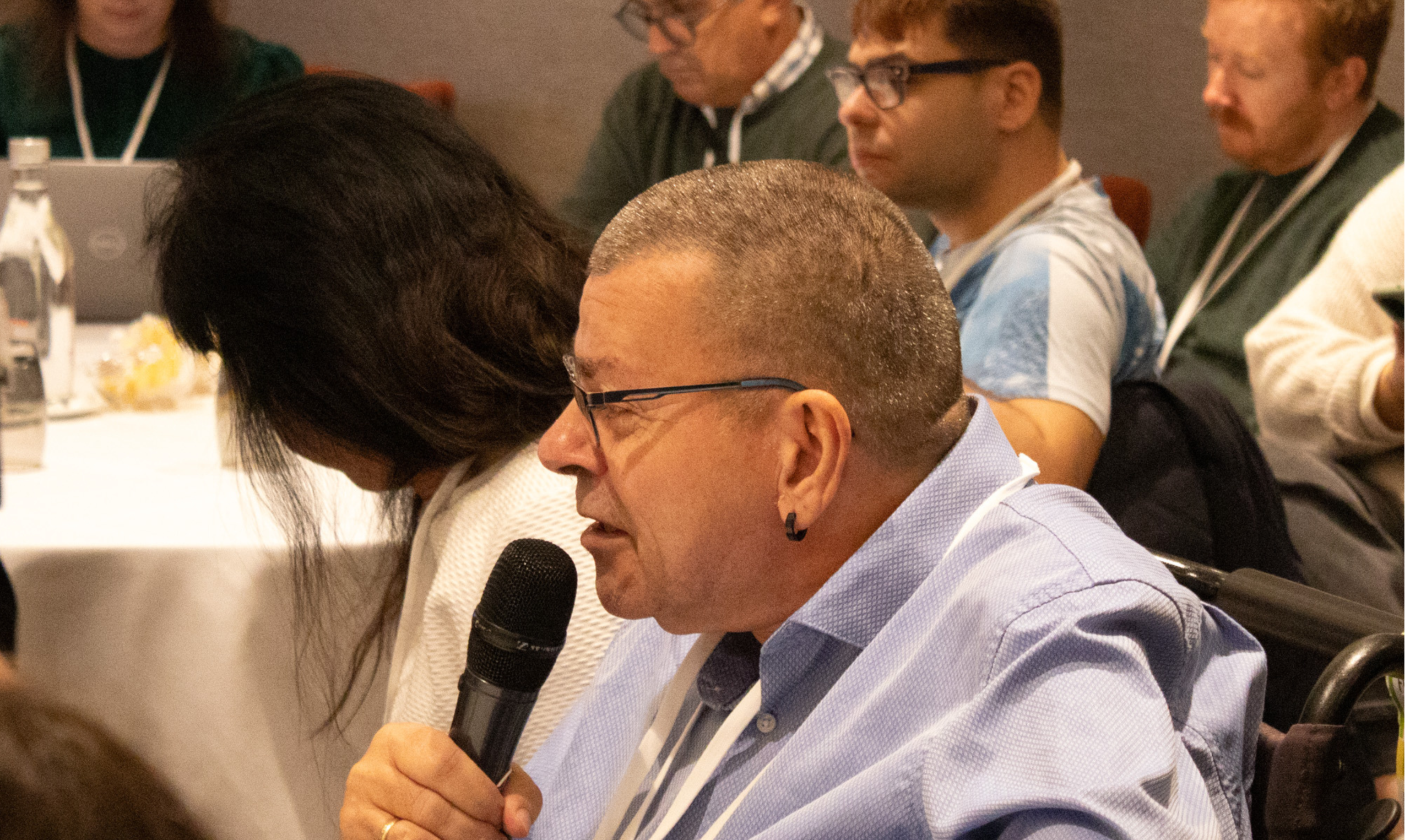
She added some proposed solutions:
- Accessibility should be included from the beginning of the design of buildings, and space for assistance and equipment needs to be considered.
- Rural areas, where housing tends to be more affordable, need the necessary support services.
- The National Building Fund in Denmark was presented as a good example
Independent Living
The working group on Independent Living was moderated by Foteini Zafeiropoulou, Member of our Executive Committee. Christine Zimmer, Director at Info-Handicap (the Luxembourgish national council of persons with disabilities), reported the main obstacles:
- Improvements in independent living are being rolled back, and policies are not properly funded.
- The removal of rights related to legal capacity and the lack of affordable and accessible housing are considerable obstacles.
- Even when housing is available, other rights and support are not: personal assistance, healthcare, employment, social protection.
Some proposed solutions were:
- more investment in accessible housing and services, along with progress on rights-compliant legal capacity models.
- Keeping service providers central to the transition from institutions to independent living, as it is crucial for them to be completely on board and invested in this transition in order to offer support in the right way.
- Having organisations of persons with disabilities offer supported decision-making services to persons with disabilities to assist them in making choices regarding where and with whom they live.
Workshop 3
The working group on rules for accessible buildings focused on standards and regulations that ensure homes actually fit its inhabitants’ needs. Grzegorz Gajewiski, a member of the European Commission’s Housing Task Force, moderated it. Fionnadh McGonigle, from the Irish National Disability Authority, reported the main obstacles:
- The lack of application of standards and regulations in many countries. This is mostly due to a lack of understanding of standards and insufficient enforcement.
- The lack of use of Universal Design concepts, and adaptability of housing.
Proposed solutions:
- A new Irish standard for Universal Design dwellings will be published early in 2027, which could be a good practice if implemented consistently.
- A cost-benefit analysis of making housing accessible is also foreseen in Ireland which could bring useful data on the perceived cost of accessibility versus its long-term benefits. The study will examine the costs and benefits associated with different percentages of accessible housing stock.
Workshop participants agreed that a better application of Universal Design and training of professionals would go a long way to solve these problems