Today, 9 May, is Europe Day. This day commemorates the establishment of the European Union.
We famously believe that the European Union needs to do much more for disability rights. However, we need to acknowledge that the Union has been key to advance disability rights.
We bring you ‘9 things the EU does for persons with disabilities’.
1. The EU fights for accessibility
Next month, a series of products and services will need to be accessible for persons with disabilities, thanks to the European Accessibility Act.
This is only one of several initiatives taken by the European Union. For example, the Web Accessibility Directive, adopted in 2016, obliges public sector websites and apps to be accessible to persons with disabilities. The European Commission has also directed standards bodies to improve standards on accessibility. The EU even created the AccessibleEU Centre to help countries and private organisations become more accessible.
Good to know: It’s important to understand that the laws adopted by the EU are ‘minimum standards’. This means that an EU law cannot diminish the rights you already have. For instance, if your national law grants 20 days of parental leave and an EU law sets a minimum of 10 days, it doesn’t mean you lose 10 days. It means that countries offering less than 10 days of paternity leave must increase it.
2. The European Disability Card

A new European Disability Card will be in place by 2028. This Card will let persons with disabilities access the conditions and discounts (priority access, assistance in transport) as nationals with disabilities when travelling to other EU countries for a short stay or on a mobility programme (tourism, business, visiting, family).
Learn more about the European Disability Card
3. EU money supports persons with disabilities
Improving the accessibility of the metro in Madrid, Spain. Funding programmes that support children with disabilities in Lithuania.
The European Union directly funds directly many of the programmes and projects that are essential in improving the quality of life of persons with disabilities – projects that are often ignored or not prioritised by national funds. More than that, these funding programmes often influence national countries to spend more money on disadvantaged groups – money that would otherwise be spent in less useful ways.
4. (Some) protection at work

The EU passed a law that prohibits discrimination at work in 2000. The law stats that persons with disabilities are protected against discrimination when we work or have work-related training. It also obliges employers need to provide adjustments and flexibility to enable persons with disabilities to be able to carry out their work.
While the situation is far from perfect, it is because of this law that you can go to court or ask for the support of an equality body if you were discriminated against.
5. More protection when travelling
It’s thanks to European Union laws that we have enhance protections when travelling across borders, from one country to another. We have the right to support and compensation in many cases: if the trip is delayed or cancelled or if you are denied boarding under certain circumstances.
As a person with disabilities, we also have the right to assistance in many transport modes. Unfortunately, you still have to pre-notify and pre-book assistance in most cases when travelling. But things are improving: a new law on train travel reduces pre-notification times, improves staff training and strengthens compensation.
6. The EU Parking Card

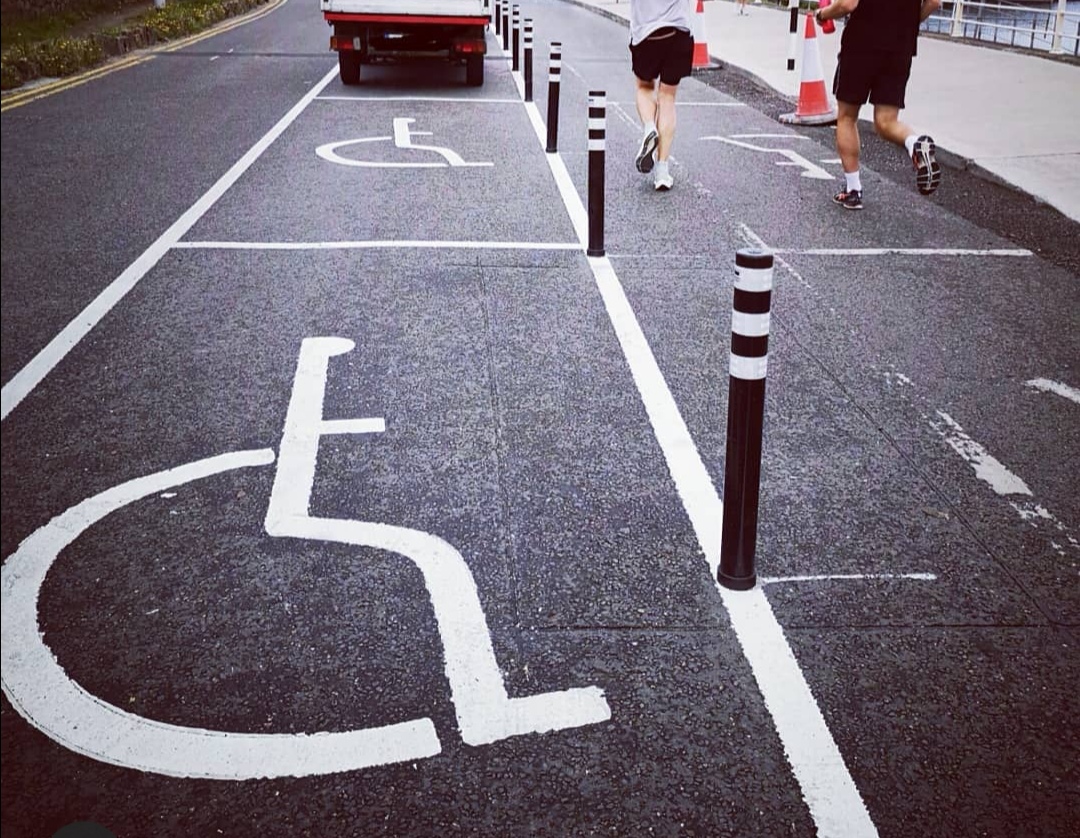
The EU Parking Card is getting an upgrade! The European Parking Card EU for persons with disabilities allows you to park in reserved spots. This means that if you decide to travel to another EU country, you don’t need a local disability parking card!
Find how you can get your EU Parking Card.
7. Going to hospital in another EU country without extra charges
You can go to the hospital or doctor without extra charges thanks to the European Health Insurance Card, if you have fall ill or have an accident in another EU country. More: you also have some protections and rights when seeking medical care abroad.
Attention: you will pay the same as what the people living in that country pay, not what you would pay in your home country.
8. Rights for victims of crime or violence
Countries must grant you rights to information and support in a format accessible to you if you are the victim of a crime in the EU, thanks to an EU law called the Victims’ Rights Directive. The EU also took an important step to combat violence against women by adopting a stronger law with specific improvements on disability. These include accessible helplines and creating aggravating circumstances for offences committed against a person with disabilities.
9. Because we can fight better together
The European Union supports organisations and projects that unite the disability movement.
The Citizens, Equality, Rights and Values Programme (CERV), for example, supports organisations such as the European Disability Forum, Inclusion Europe, and Autism Europe. These organisations not only advocate for ambitious laws and policies, but also allow disability advocates to come together and learn from each other’s experiences. The funding also supports work in more specific areas, such as preventing supporting child victims with disabilities.