
Blog post by Arianna Americo, Senior Project and Forum Coordinator, Eurocities

A city is experienced through thousands of everyday moments: getting on a bus, finding a home, going to work, attending a football match, accessing public services or simply spending time with friends. For millions of Europeans with disabilities, whether these ordinary activities are possible independently still depends on how cities are designed and how services are organised.
This is why accessibility cannot be reduced to ramps, lifts or building standards. It is about participation and choice. It encompasses the built environment and transport, but also housing, employment, culture, digital services, communication and opportunities to live independently. Eurocities has long advocated for precisely this approach, calling on cities to mainstream accessibility across policy areas, work across municipal departments and involve end users from the beginning of the planning process.
And cities are uniquely placed to make this ambition tangible. Local authorities shape many of the environments and services people encounter every day. Previous Eurocities research showed examples of cities intervening across the entire spectrum, from applying universal design principles and adapting public transport to supporting employment and investing in community-based services for independent living.
What does an inclusive city look like?
In Vienna, inclusion starts with a simple but powerful principle: “Nothing about us, without us.” The city’s approach combines accessible infrastructure with community-based services and direct participation by persons with disabilities in shaping the policies that affect them. The Vienna Social Fund offers comprehensive system of community-based services, counselling, employment-related support, early intervention, mobility assistance, and personal assistance. Vienna has also been progressively shifting away from institutional care towards supported housing integrated into ordinary neighbourhoods. More than 5,400 people currently live in these settings.
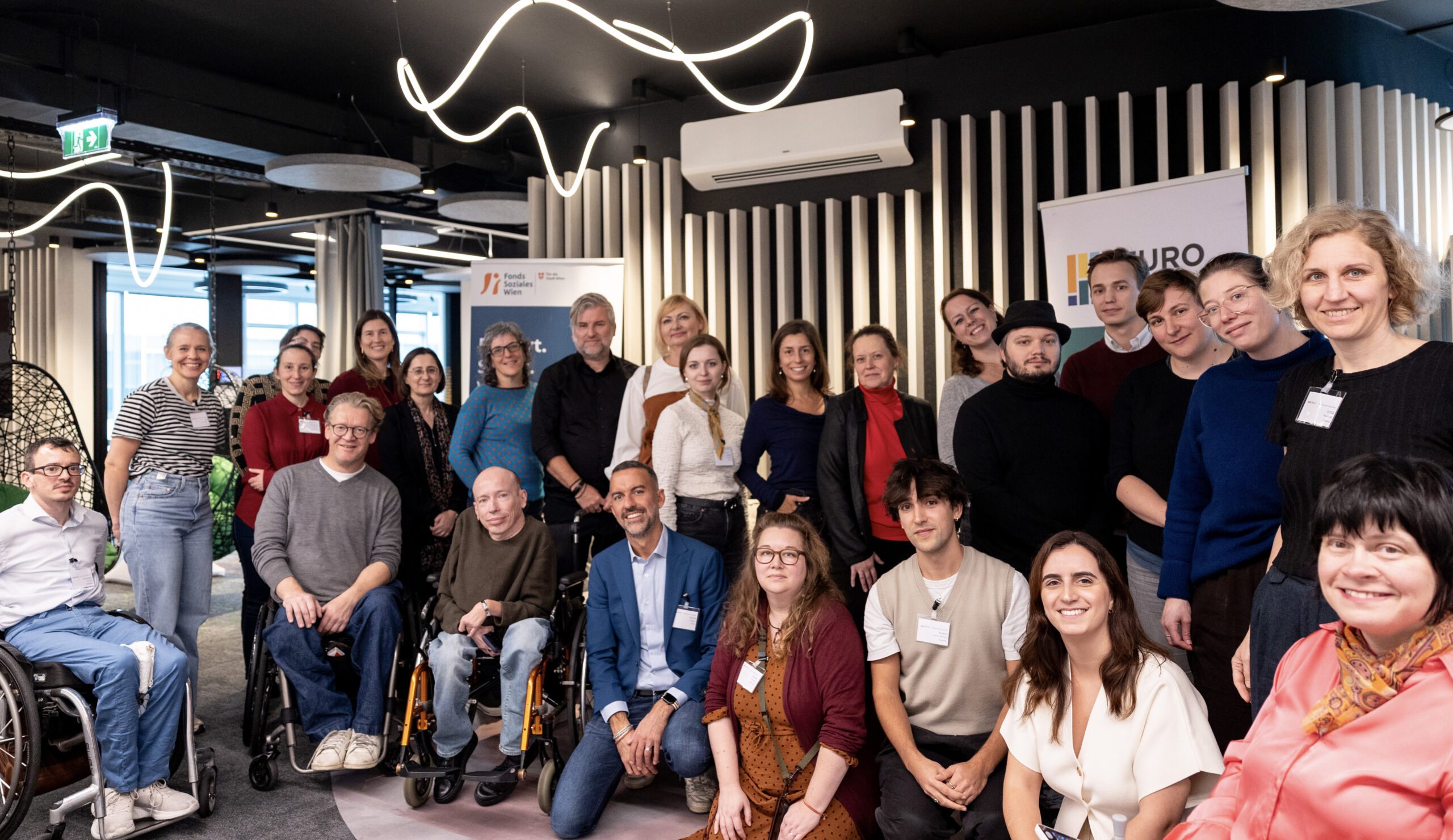
This philosophy extends to policymaking itself. Service users and self-advocates are involved in shaping services and the city-wide ‘Inclusion Vienna 2030’ strategy. Rather than treating accessibility as something provided for people, Vienna’s experience demonstrates what changes when people with disabilities become active partners in designing their city.

Toulouse brings the same ambition into public and cultural life. Accessibility is being embedded into everyday social and cultural experiences. Major sports can be followed through live audio description; the city’s public transport combines step-free access with visual and audio information; adapted bicycles expand opportunities for independent mobility; and cultural venues provide services including sign-language support, braille and large-print guides and audio-described sessions. Through its ‘City for All’ label, Toulouse also encourages organisers to make public events accessible to different audiences. Crucially, the city consults disability organisations and carries out regular user testing, recognising that accessibility works best when those who encounter barriers help design the solutions.
Helsinki offers another perspective, showing that inclusion also means giving people greater control over their everyday lives. Finland’s new legislation on services for people with disabilities, which entered into force in 2025 and is grounded in the UN Convention on the Rights of Persons with Disabilities, provides the legal backbone. The city’s strategy is wide-ranging, encompassing independent living services and accessible housing, as well as inclusive education, digital participation, and employment support through the Individual Placement and Support (IPS) model.
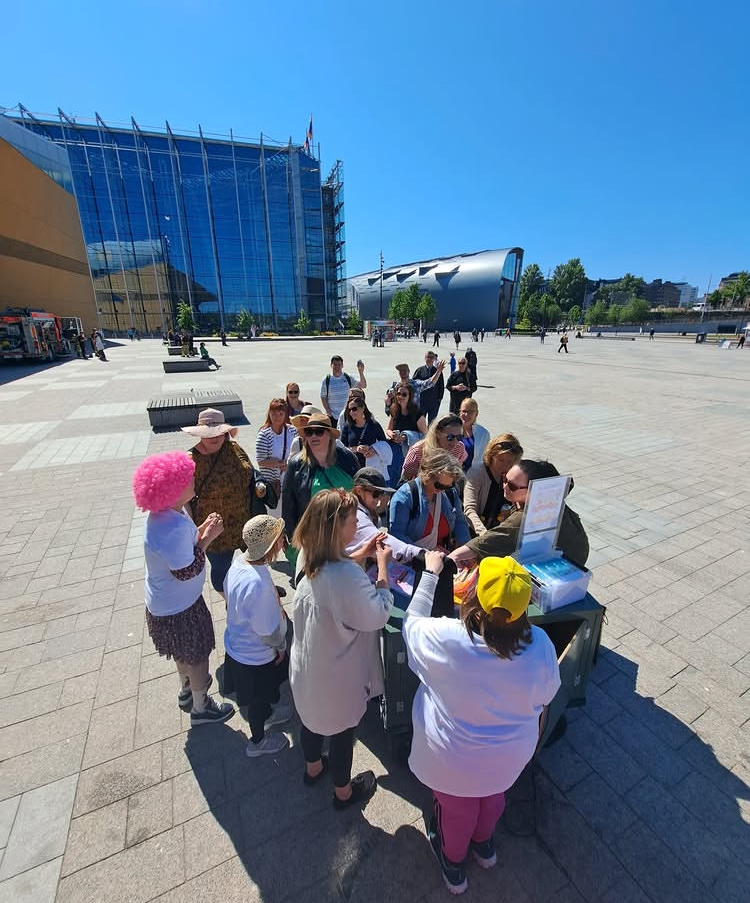
On the ground, the approach comes alive in initiatives such as the ILO Agents: rather than organising a fixed programme for participants, instructors create space for people with disabilities to choose and lead activities themselves. Participants develop creative projects, organise events and take on peer leadership roles. It is a small-scale example with a much bigger message: inclusion is not simply being able to access a space; it is having the opportunity to shape what happens there.
From good practice to shared progress
No city has solved every accessibility challenge. That is precisely why exchange between cities matters.
Through Eurocities‘ group on the Inclusion of Persons with Disabilities and the Barrier-free City for All Working Group, city practitioners can compare approaches, examine what is working, discuss common obstacles and adapt ideas to their own contexts. This goes beyond showcasing success stories. The value lies equally in putting difficult, unresolved questions on the table.
The two groups operate thanks to the candid contributions from city practitioners from all over Europe, bringing multidisciplinary expertise under the overarching principle that accessibility works best when it is mainstreamed in every planning choice, when municipal departments work together, and when persons with disabilities participate from the outset.
From recognition to the next frontier
European initiatives such as the Access City Award have helped make local achievements more visible and encourage cities to raise their ambitions. Vienna’s recognition with the 2025 award is one example of how progress at local level can inspire others.
But awards are milestones, not the destination.
The real measure of an accessible city is far more ordinary: whether someone can choose where to live, move around independently, find meaningful employment, access information, enjoy culture and sport, and participate in decisions affecting their life.
On World Cities Day, that offers a powerful reminder. Building accessible cities is ultimately not about designing for a minority. It is about designing urban life around human diversity from the outset. And when cities remove barriers to independence and participation, they create better cities for everyone.