Blog post by Phillipa Tucker, EDF Central and Eastern Europe Coordinator.
Let’s talk about spaces. I don’t mean just physical spaces, but let’s start there. Let’s talk about what is behind things, what takes up space, and what is in the place, the space behind.
In early 2024, as part of our work for the Empower Ukraine project, EDF and CBM staff visited several villages, towns and cities in Western Ukraine, and I learned a thing or two about space and spaces and place in Ukraine.
Space: Dedication to accessibility
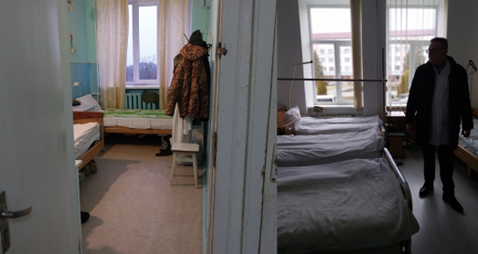
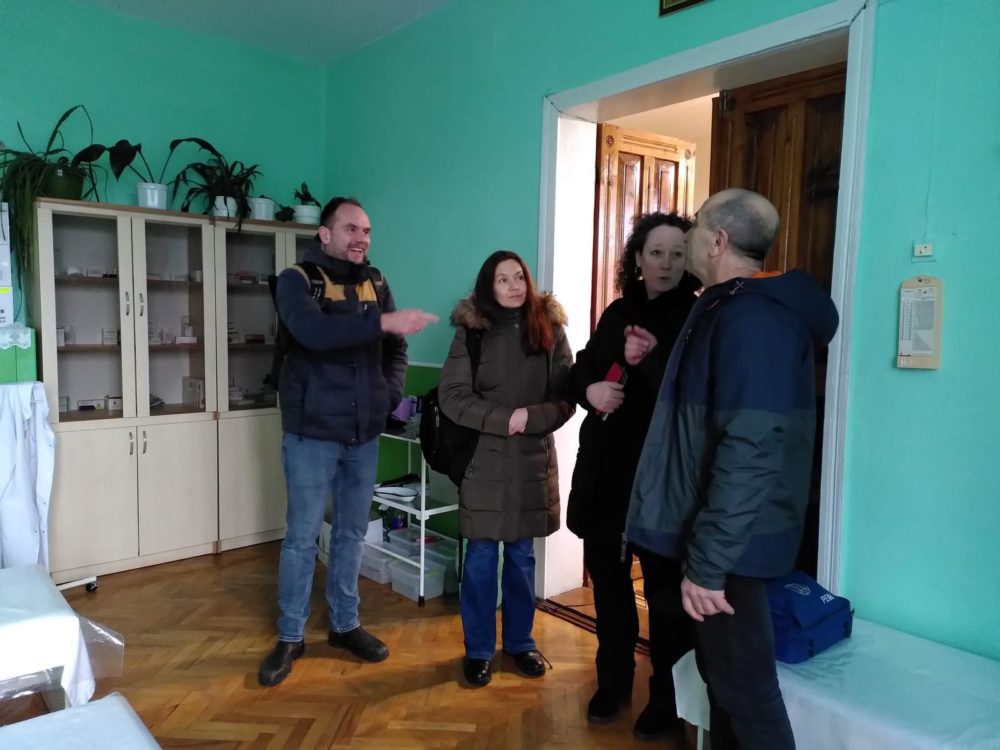
Let’s start with the space for patients in hospital rooms. We visited a military hospital “Chernivtsi Regional Veterans Hospital” and a public central hospital in Storozhynets, Chernivtsi region, and saw that with the number of beds tightly packed per room, and the low height of the beds, and the lack of adjustable beds, that there was no space for wheelchair users, persons with spinal injury to move around freely.
The spaces are small, cramped and not adapted to the needs of persons with disabilities or patients with mobility constraints.
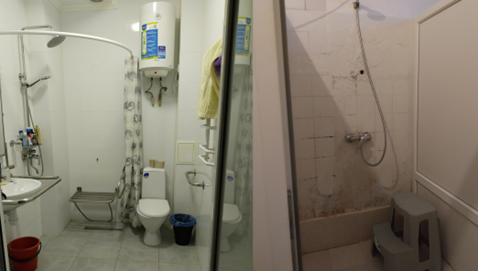
One young veteran we saw had pins throughout his right leg would not have had such a gentle smile on his face when he had to use the bathroom facilities due to the fact that they were not at all adapted. Indeed, we discussed the fact that he was at risk sitting on a light plastic chair in a shower, up a couple of slippery stairs.
Disability rights activists, in Chernivtsi region and the hospital staff of “Chernivtsi Regional Veterans Hospital” are all championing the installation of accessible room and bathroom facilities and although there remains much to be done, it was obvious to me that their dedication to making the spaces accessible will not be squashed. It is in these hospitals that the National Association of Persons with Disabilities does disability inclusion trainings and provides expert technical advice to staff and administrators on everything from how to access assistive devices from the Ukrainian government to how to do disability inclusive mental health and psychosocial support. This work falls under the German Foreign Federal Office funded Empower Ukraine project, with partners European Disability forum, Christan Blind Mission and National Association of Persons with Disabilities and the League of the Strong.
Place: Creativity, collaboration and hard work
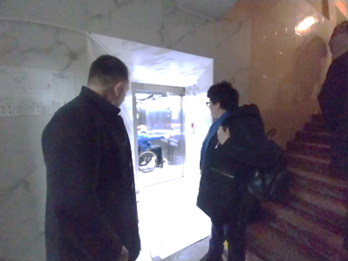
Next, let’s consider the stories behind entering a place. Some years ago, at the Communal non-profit enterprise “Storozhinetsk multidisciplinary intensive care hospital”, a mother who uses a wheelchair had two sick children in the paediatric unit on the third floor, under the watch of Dr. Oleksandr Voytsekhovsky. The doctor explains how he saw and heard her frustration at not being able to reach the third floor, and then later her gratefulness and complaints at being carried up the stairs by staff.
As hospital administrator, building in a lift into the old building became a priority and has been achieved. A second lift is now also being built in a wing of the hospital. Similarly in the one of the rural villages of Storozhenets, Chernivsti region, we visit the staroster to follow up on the decision to move the health clinic from the upper second floor of the administrative building to the lower ground floor.
Advocacy on accessibility issues took place within the framework of two projects (Empower Ukraine and Phase Project, both managed through EDF and CBM). NAPD and the local community and regional coordinators with the active role of Staroster, Ivan Molovanyuk, worked to map clinics, identify barriers to accessibility and then put in place building renovations to make the clinic accessible, not just by placing a ramp, but by moving the clinic to the first floor, and building new broader doorways, constructing accessible bathrooms and the like.
Given that the two projects have very specific parameters on what can and cannot be funded, it is a masterclass on creativity, ingenuity and making money work hard for great outcomes. Locals, and we see many more with wheelchairs and other disabilities since the start of the war, will now be able to enter this place physically and be served inclusively thanks to the trainings provided too.
Spaces: Building community and leaving no one behind
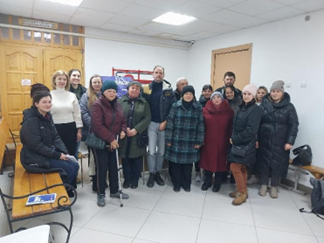
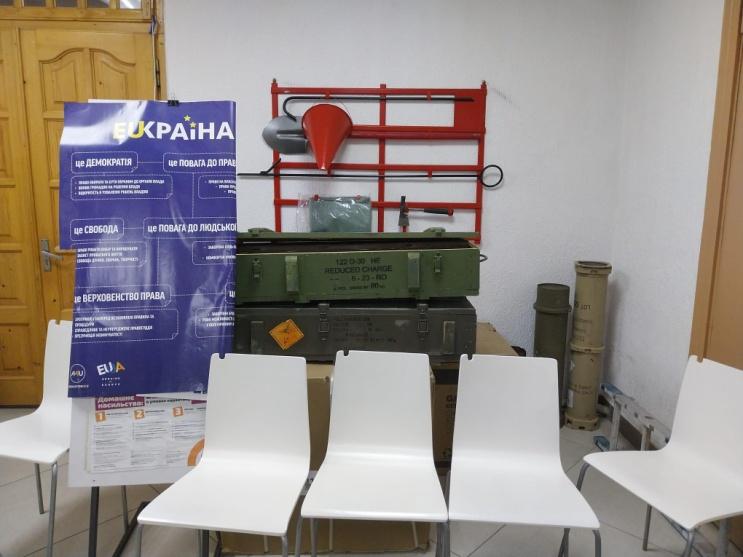
In village Stary Bohorodchany we had more to learn and see on space and place. We met with the recipients of the cash assistance that League of Strong provides in this village. Persons with disabilities in the first group, which in Ukraine means those categorised with disabilities that make working unlikely, are eligible for cash assistance ranging from 100€ to 300€ (in every 12-month period) depending on the system of cash assistance provided by our partners. We met them in the local town administrative building, where we continued our meeting in a small room downstairs after a bombing alert was announced. Interestingly, in the photo taken, hidden in the space behind us were empty shells that the locals collect as souvenirs of the gains in the war.
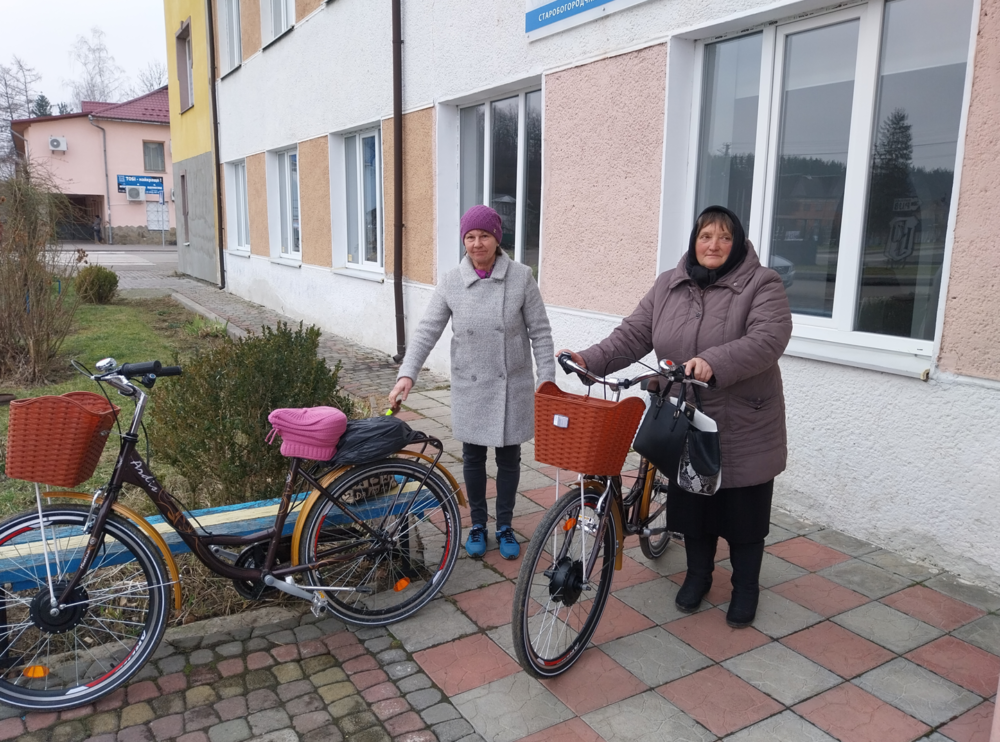
In each oblast we also provided bicycles to social workers, saving them time to visit the 20-25 clients they reach in their work. In the photo above we see social workers, Palyvoda Oksana and Oliynyk Svitlana, from Bohorodchanskyi Territorial Center of Social Services. These bicycles were very welcomed across the project by social workers, taking them places they need to go, faster and more safely than walking.
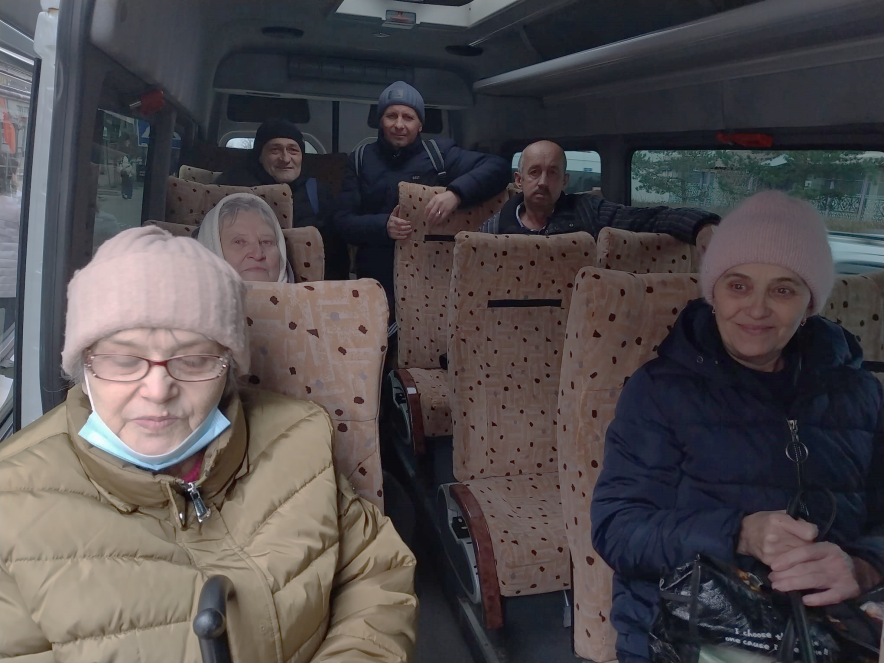
Another interesting finding was discovered in another space that the Empower project created. As part of the work transport is provided to people to and from their homes, or local village pick up point, to their medical appointments. Many of the users are attending haemodialysis, for example. The 3 hours there and three hours back commute is cut down to 60 or 90 minutes for most users. Given the beneficiaries health status this also makes a considerable impact on their energy levels.
But a wonderful, and unexpected thing also happened in the spaces that were created inside the vehicle. Users reported that a peer support group had emerged! As they spend time together in the bus, they chat, share their stories and worries and happinesses with each other, and in so doing had created their own self-help group, strengthening and building their own mental health resilience. In those shared spaces comes a wonderful result! One women also told us that she felt more independent and less reliant on her husband of several decades and gave us a good laugh about independent women!
There are many more activities, space, spaces and places that we saw, and it was inspiring to see the work being done by local teams at League of the Strong and National Association of Persons with Disabilities, but one lingering thought remains for me. Too often we saw Ukrainian flags at gravesites of soldiers who have died fighting.
As we drove, there were too many cavalcades of funerals, and we stopped and waited in silence while they pass. Too many people told stories of loss, of worry and of pain. Although many are young men, I also met an older man who had recently been demilitarised after two years. He is still contributing through working on disability rights. I am left with a sense that in this place, in Ukraine, we find resilient people, people with a strong sense of place, and people who projects like Empower to continue to give, build and support.