Today we mark three years since Russia’s full-scale invasion of Ukraine. 1097 days of a war that has devastated millions of lives, including the lives of over 3 million persons with disabilities living in Ukraine.
Persons with disabilities faced disproportionate challenges from the start – obstacles to evacuation, lack of accessible shelters, and the disruption of critical services have placed many in life-threatening situations. That’s why we and our partners mobilised to support the organisation of persons with disabilities in Ukraine in providing life-saving aid and advocating for disability-inclusive policies. This included providing direct support to over 70,000 people and advocating for disability-inclusive response, recovery and reforms.
As Ukraine continues to resist and rebuild, the full inclusion of persons with disabilities must remain a priority.
The impact of the war in numbers
- 300,000: the number of people that acquired a disability due to war-related injuries.
- 1,8 million persons with disabilities in need of humanitarian assistance.
- 3.9 million people in Ukraine are estimated to have moderate to severe mental health conditions, with persons with disabilities among those most at risk.
- Half of displaced households living in collective shelters include older persons or people with disabilities.
Our response
Two major initiatives have been at the core of our Ukraine Response: the ‘Empower Ukraine’ and ‘Ukraine crisis – OPD led disability inclusive response and recovery” supported by the German Federal Foreign Office and CBM International.
The initiatives join 15 partner organisations from 8 countries, including 2 organisations of persons with disabilities in Ukraine – the National Assembly of Persons with Disabilities in Ukraine and the League of the Strong.
The programmes have evolved to prioritise the needs in Ukraine, Moldova and Poland. In earlier stages, the programme also supported organisations in neighbouring countries in assisting families evacuated out of Ukraine.
Some of the concrete effects of the programmes included:
- More than 70,000 people have been supported through direct services, and at least 36,000 are persons with disabilities. Numbers from a partial survey point to 58% being women with disabilities, and 13% children with disabilities.
- More than 11,500 people have received cash assistance and assistive devices.
- At least 850,000 euros were distributed through cash assistance to beneficiaries.
- More than 8,000 persons with disabilities and their families received transport services, usually to attend health care appointments.
- More than 10,500 people were reached by inclusive mental healthcare activities, including psychological first aid, trainings on disability inclusive mental health and psycho-social services (MHPSS), and one on one counselling.
- Healthcare and humanitarian professionals have participated in capacity-building training programs on disability inclusion.
These numbers are based on conservative estimates, due to the different indicators collected across projects.
The path forward
Accessibility and inclusion must be at the heart of recovery efforts as Ukraine moves towards reconstruction. EDF and its partners continue to push for:
- Barrier-free infrastructure, especially in healthcare, education, work and homes in post-war reconstruction.
- Full deinstitutionalisation, transitioning from segregated communal settings to independent living with community-based support.
- Better policies and funding for disability-inclusive humanitarian aid and social services.
- Nothing about us without us: Policies and practices that are led and informed by persons with disabilities because we bring the necessary knowledge.
Stories of resilience
The impact of this work is best seen in the people it has supported.
An accessible house for Oleksandr
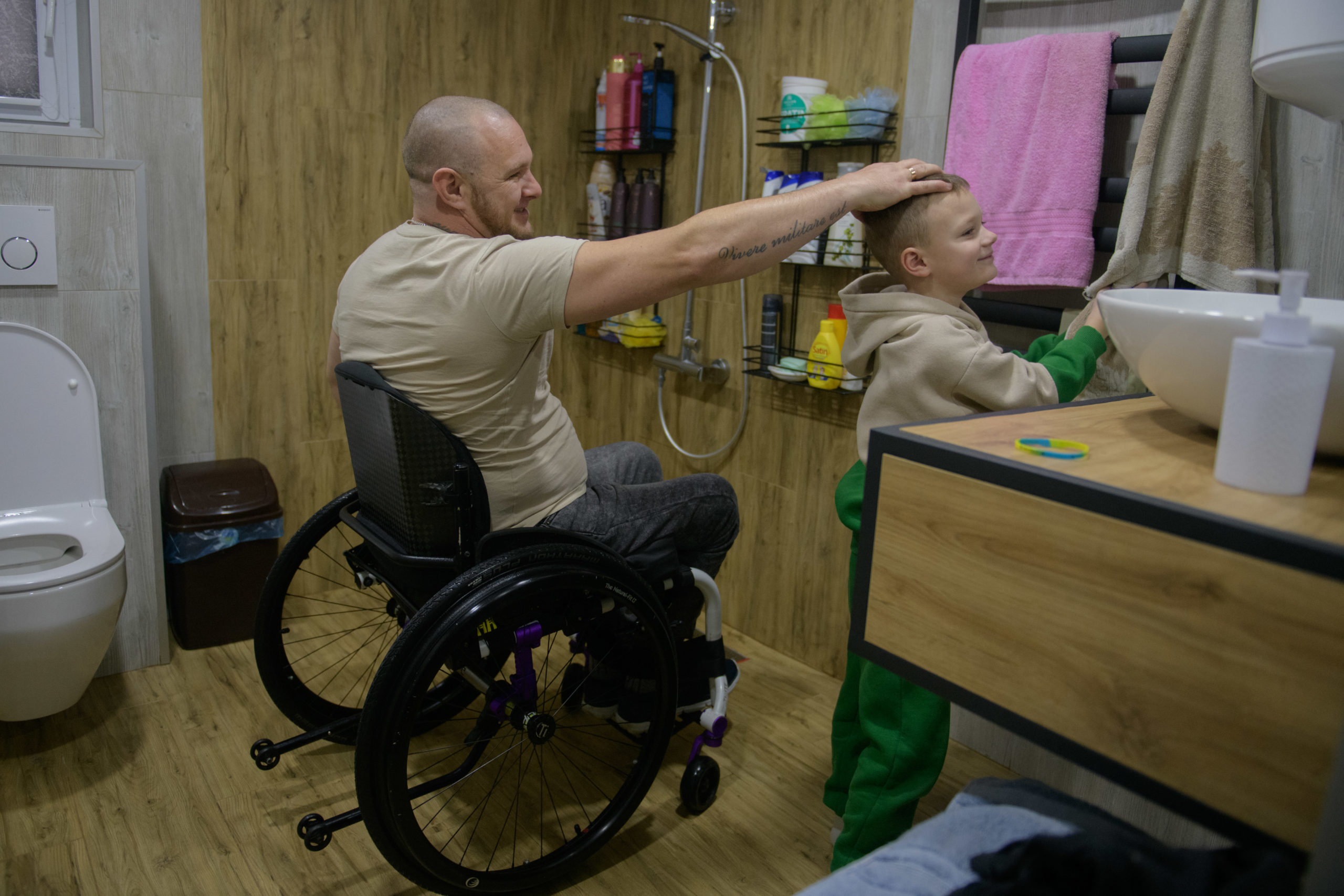
Oleksandr, a veteran from Kyiv and former biker, sustained a spinal cord injury in 2022. Through the programme, experts in disability-inclusive design provided support to redesign and modify his apartment for accessibility. This helped Oleksandr regain independence and is part of an initiative that has assisted over 52 people in improving accessible living in Ukraine.
Transport for social workers
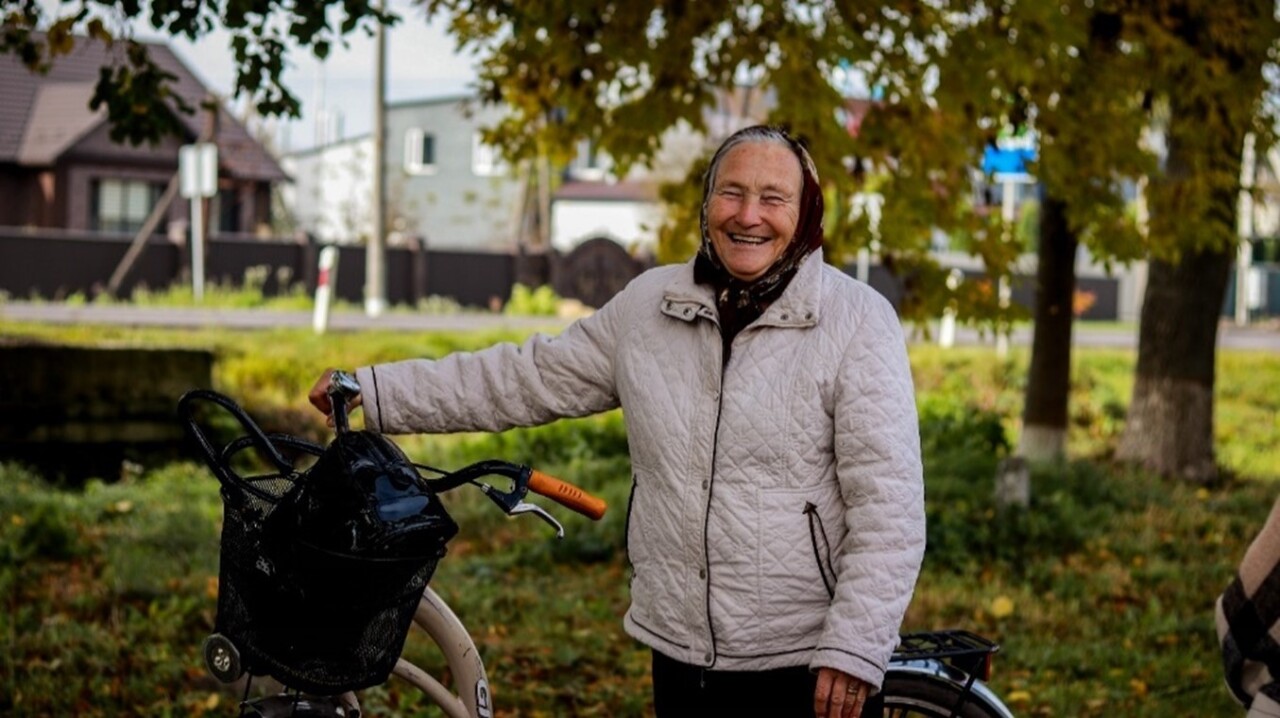
The programme has provided a number of bicycles to social workers in the geographic regions where we work. This might seem an unusual choice to those in urban areas but social workers in Ukraine serve various villages and dozens of families in their service area. They need to transport hygiene products, food and medicines, and sometimes across very far distances. The provision of bicycles has been very popular, and the need remains unfilled.
An academy for disability rights
A key achievement has been the Riga Academy – a series of in-person trainings for disability activists and Ukrainian government representatives focused on best practices for implementation of disability rights. Additionally, the programme contributed to the move towards independent living by developing the Strategy for Ensuring the Right of Every Child in Ukraine to Grow Up in a Family Environment for 2024- 2028 in collaboration with Ukrainian state authorities.
Conclusion
Three years of war have tested the resilience of persons with disabilities in Ukraine. But with continued support and a commitment to inclusion, they will not be left behind.
Further reading
- Check out the Warsaw Declaration: we call for disability-inclusive recovery and reconstruction of Ukraine (Word)
- Ready to include disability rights? All you need to know on what to do to improve your disability rights inclusion as a donor in Ukraine (Word document)
- Executive Summary of the Evaluation of Phase 1 (April 2022-July 2023)
Contact
Phillipa Tucker
Eastern and Central Europe Coordinator
Authored by: Phillipa Tucker, Eastern and Central Europe Coordinator; Mariya Yasenovska, Humanitarian Action Policy Officer – International Cooperation; Gordon Rattray – Programme Coordinator
Featured Photo Credit: Yurii Yevtushko